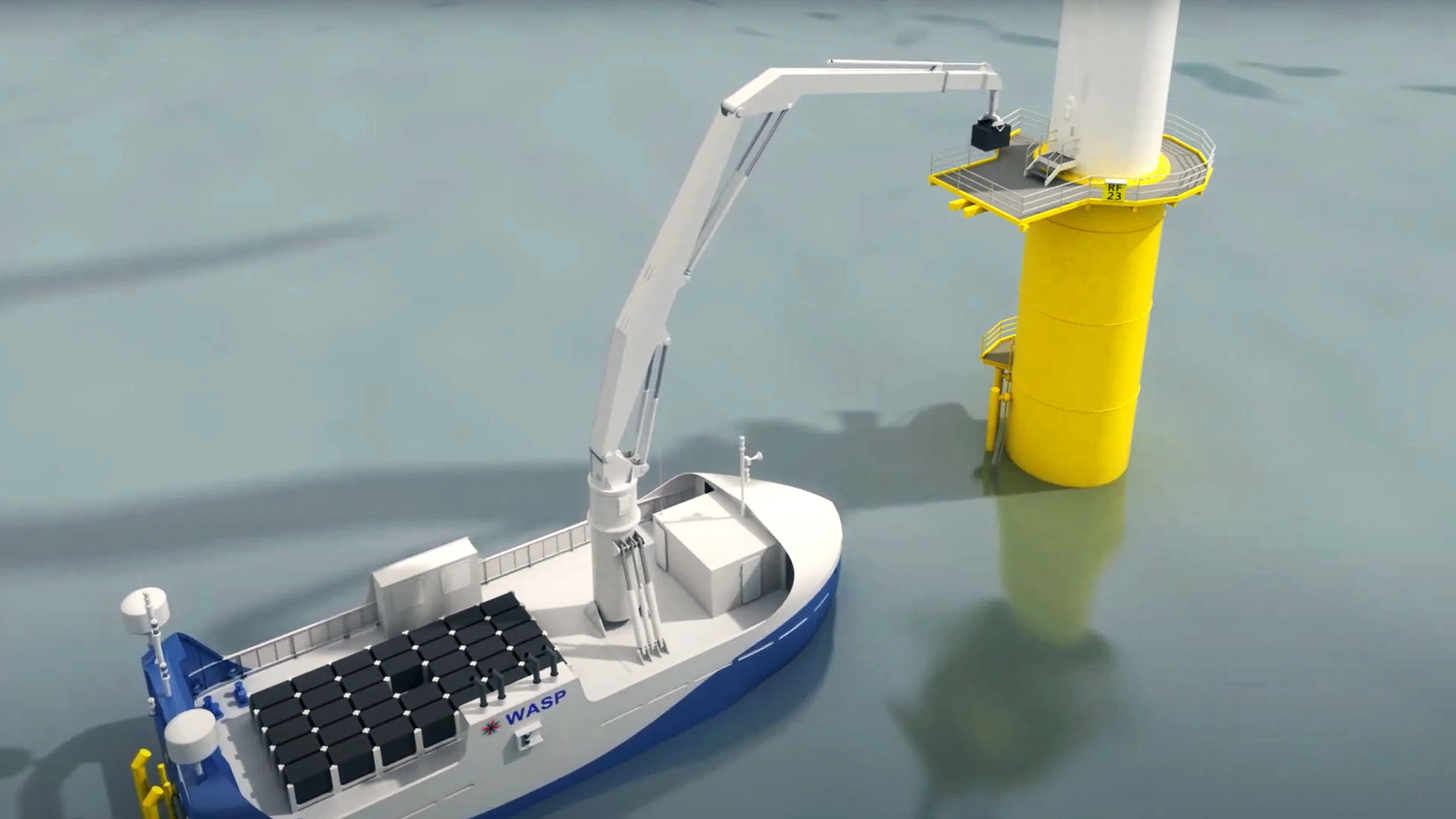

Houlder tackled high operational costs and safety issues for offshore wind farms by developing an autonomous vessel concept that reduces crewing expenses and enhances operational safety.
Autonomy at Sea: The Future of Wind Farm Maintenance
Offshore wind farms grapple with high operational expenses, with vessel and crewing costs being significant factors. Cutting these expenses while boosting safety is a pressing challenge.
Enter the Windfarm Autonomous Ship Project (WASP). Houlder, collaborating with industry partners, investigated the use of unmanned vessels for offshore wind operations.
Houlder developed an autonomous vessel concept. This remotely controlled ship transports cargo without a crew, potentially lowering crewing costs.
With no humans on board, the risks associated with human error in cargo handling may be reduced.
The design focuses on reliability and simplicity. Its displacement is slightly more than that of traditional Crew Transfer Vessels, enabling it to handle offshore conditions while carrying cargo 15–20 metres above sea level. Standardised, weather-tight cargo pallets and cell guides automate handling, streamlining operations and reducing power needs.