
HOME™
Houlder Optimisation and Modelling Environment

Model the future.
Decide with confidence.
Data + Expertise + AI
Uncover hidden value.
Supercharge traditional disciplines.
The possibilities are limitless.
The gains are proven.


Efficiency Scan
Uncover the efficiency potential of your vessel just by answering some straightforward questions and we’ll do the rest.
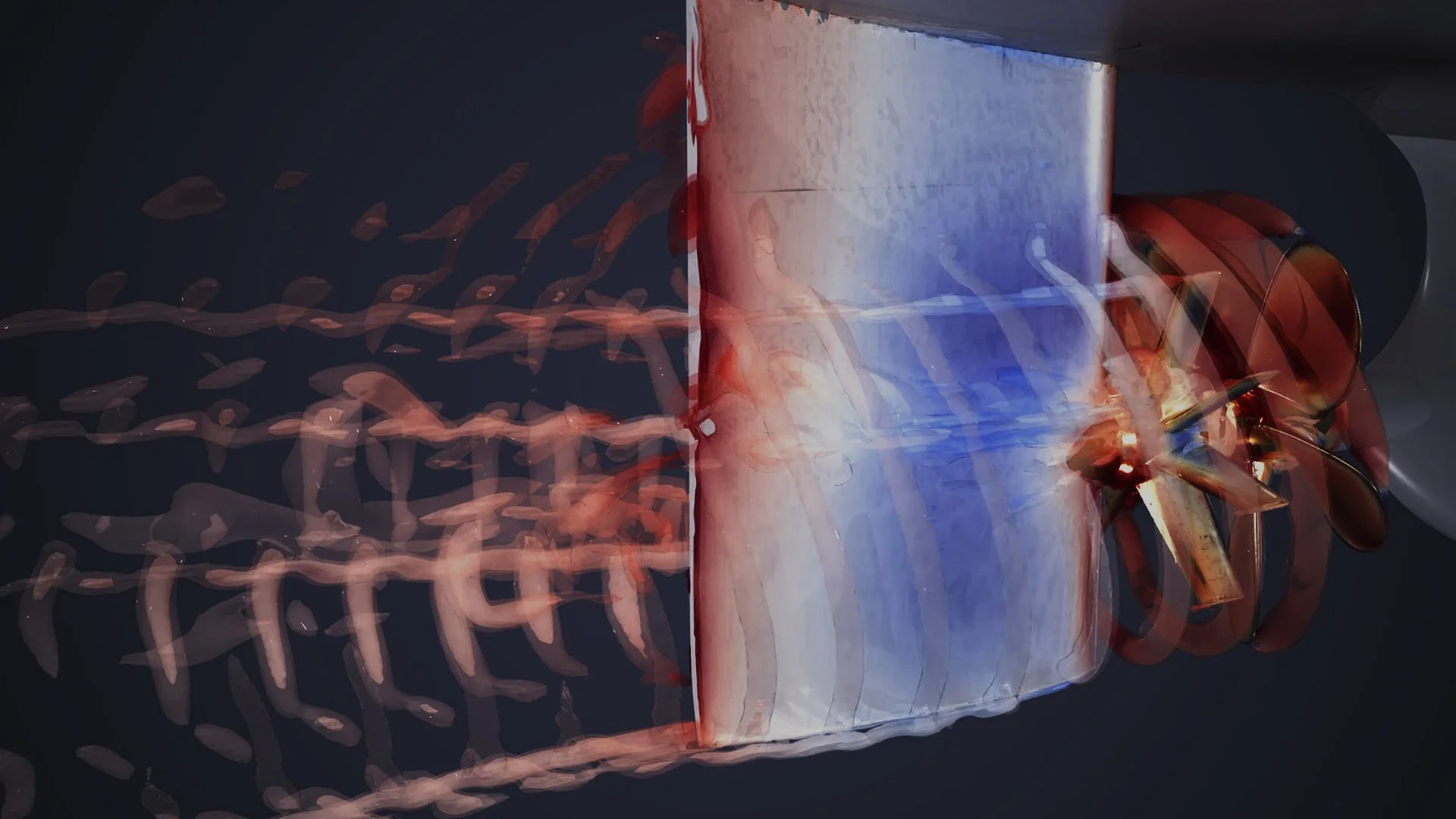
HOME™ Verify
Physics-Based Operational Modelling
Turning vessel data, engineering expertise and advanced modelling into decision-grade evidence for design, retrofit and operational investments.
HOME™ Verify moves beyond assumptions and OEM claims towards independent, evidence-based insight into vessel performance and decarbonisation opportunities.
It enables owners, operators and designers to evaluate technologies, understand operational impacts and make confident investment decisions by combining advanced simulation, onboard data and experimental testing within a ship-specific Performance Twin.
Unlike traditional assessments that consider technologies in isolation, HOME™ Verify can evaluate multiple solutions simultaneously, capturing the interaction effects between hull, propulsion, aerodynamic and operational changes to reveal their true combined benefit.
From concept through to deployment and validation, HOME™ Verify lets you explore the future before committing to it.
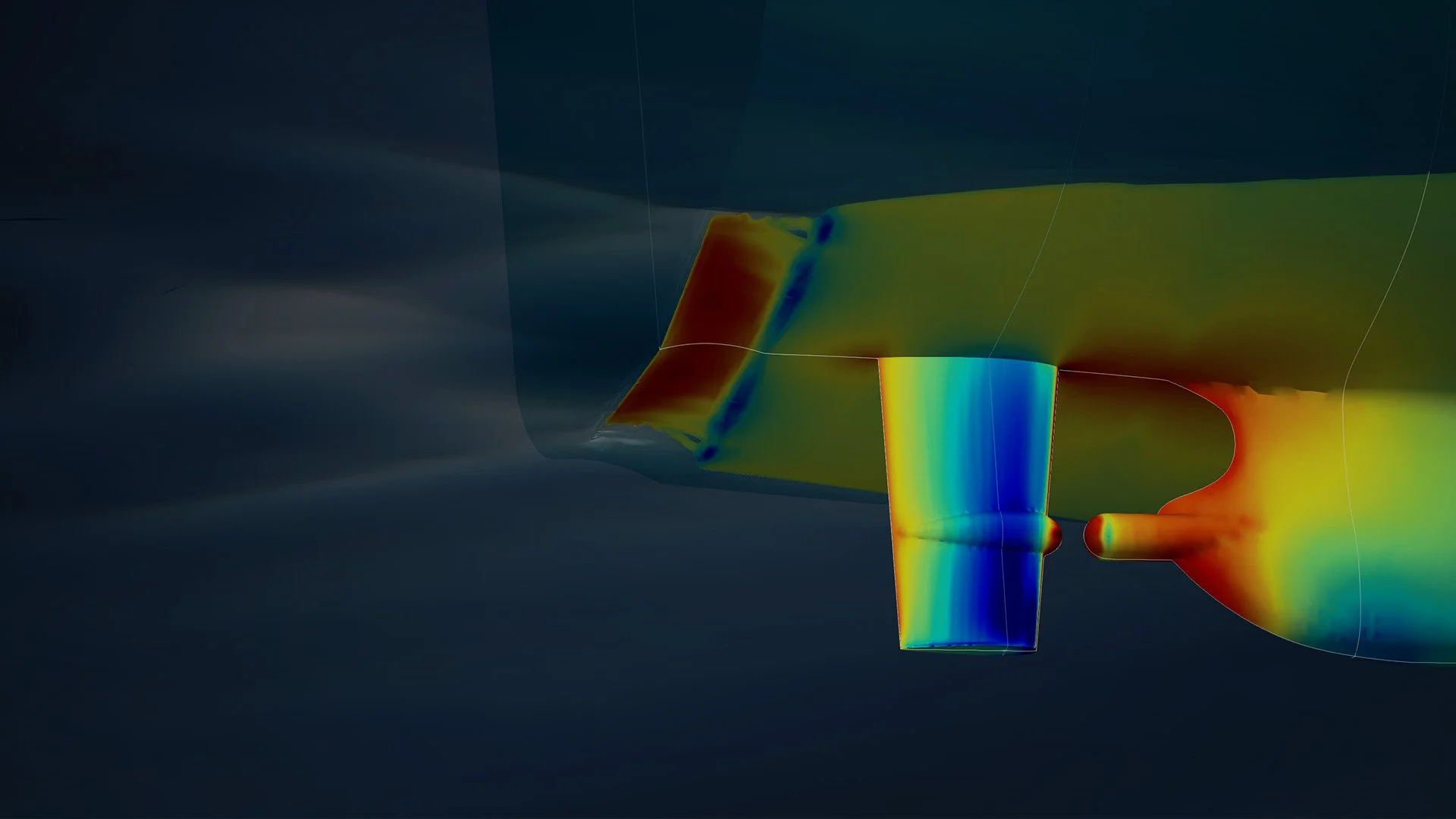
HOME™ Optimise
AI Accelerated Hull Form Optimisation founded on Hydrodynamic Analysis and Testing
A new era for energy-efficient hull forms. A step change in confidence that a specific feature or entire hull will deliver the best performance in actual operating conditions.
Optimisation typically comes with caveats.
Limited design iterations – people, processing power and cost constraints. Design speeds and loads.
That has now changed.
We couple extensive experience and research with cutting edge optimisation and CAD deformation techniques. Important to avoid the illusory and to capitalise on the counterintuitive.
We optimise your ship for its real-world operation.
FAQs
-
HOME™ Verify is a physics based operational modelling service which we provide to owners, operators and designers alike to help them make informed decisions and minimise assumptions and guess work.
It is a collection of digital representations of the various components that make up the ship and govern its performance. These digital representations can be built from:
Empirical methodologies
Computer simulations
Model testing
Sea trials
Long term vessel monitoring
We work with our customers to gain an understanding of their questions and the data they have, allowing us to recommend the best solution for them.
-
Less than you might think. It’s hard to generalise as circumstances vary from project to project. Typically, however, there’s a low-fidelity, tightly bounded initial scope costing up to £10k. After this there’s a break point. Further fees would form part of a business case calculation around likely payback and ROI. No compelling case, no project. We only move forward if the potential savings far outweigh incremental design and engineering fees.
-
The more information you can provide, the better, as it may reduce the amount of work we have to do and therefore reduce the cost of the initial scope. As examples; if you can provide a 3D CAD model of your hull, then we do not need to draw one; if a model test report can be provided then this will be used to characterise your hulls performance early on instead of CFD.
We know that information is often limited, and we specialise in building understanding from the ground up using whatever information is available. Even if you don’t have a lines plan, we can use the drawings you do have to arrive at the digital performance twin.
-
The question implies an openness towards collaboration. That’s exactly how some of the most accomplished vessel designers globally are using Houlder and HOME™. For example, those working on a new design could benefit from:
Early assistance with hull selection
Optimising the hull with RANS CFD
Confirming the performance using physical model testing
The performance models built throughout these assessments will be used in HOME™ Verify to study the design’s performance in its future operation.
-
A “what-if” analysis allows you to study future scenarios for your vessels. Just think of all the questions you’d like to explore with sufficient resource. “What-ifs” ranging from design decisions before the vessel is built, to the retrofit of energy efficiency technology during the vessel's life. Digitalisation makes this possible. However, they all require knowledge of:
The vessel’s real-world performance before and after the “what-if” is implemented
The vessel’s operation
The regulatory and economic landscape now and towards the future
HOME™ brings this knowledge together to deliver rigorous technical analysis and translate it into clear, actionable recommendations.
-
Data from vessel monitoring systems can be an extremely valuable resource. It can also be overwhelming - a mountain of data with untapped potential.
In our HOME™ Verify workflow, your vessel monitoring data can be used to build the performance twin and validate RANS CFD simulations. This validated model could be used to:
Understand the savings of currently fitted technology such as wind assist devices
Conduct a “what-if” analysis with the added confidence obtained from the vessel monitoring data
-
We’ve noticed this technology brings us closer than ever to our clients. HOME™ Verify is a collaborative process that gives you direct access to our engineers and advanced simulation capabilities. We discuss and present our findings to you throughout. Boundaries blur as data is shared. We communicate better. We’re all on the same side of the table looking at how to make things better. The more we know about a vessel, the better we understand it and the business cases that drive clients’ needs.
-
"If you do not expect the unexpected, you will not find it, for it is not to be found by search or trail."
- Heraclitus, c. 475 BCEHOME™ provides more than a set of deliverables. At its core, HOME is access to an independent team of naval architects, marine engineers and simulation specialists dedicated to helping you make the right decision for your vessel.
Using advanced simulations, onboard data, experimental testing and engineering expertise, it allows us to systematically explore options that often reveal counterintuitive insights, including interaction effects between technologies that may be missed by conventional studies.
The outputs of this process typically include:
Presentations summarising findings and recommendations
Concept drawings and modification proposals
Detailed technical reports documenting the analysis and evidence
A ship-specific Performance Twin that can continue to support future decision-making
But perhaps the most valuable output is confidence: confidence that options have been independently assessed, the difficult questions have been asked, and decisions are supported by robust engineering evidence.
-
Typically, something can be done but it’s not guaranteed.
Every combination of vessel and operation is unique. We have even found among sister ships, that different operations can change our recommendations.
We have also performed studies where modifications that produce 8% savings in certain conditions only produce savings of 3% when the operational profile and weather are considered. Therefore, once the full picture is considered the recommendations must reflect this.
We will, however, keep some important promises:
We will be honest and transparent in our findings
We hate failing to find efficiency gains for our customers but if that’s how it is, that’s how we’ll tell it
We will not disappear down rabbit holes
Projects are structured so customers get the option before deciding to commit to further analysis and cost.
Only when an intervention looks really promising will we recommend the deeper dive that’s a prerequisite for a major capital commitment.
No vested interest – 100% independent advice
Our advice is completely unencumbered by commercial connections.
This credibility is the cornerstone of all client relationships.
-
HOME™ Optimise is an optimisation process, which sees CAD deformation techniques, machine learning, and RANS CFD work in tandem to optimise a geometry. The methodology can be applied to a variety of shapes, and can be used on local features such as bulbous bows, or to select the overall hull shape.
This process doesn’t replace our hydrodynamicists and our extensive database of vessel performance, but it does help us use this data and knowledge in a more efficient manner to deliver truly optimised designs within tight deadlines.