
Pilot Transfer Safety: Why SOLAS V/23 Should Be on Every Yacht Manager's Radar Before Monaco
As the global yachting community prepares to gather in Monaco this September, conversations will inevitably focus on sustainability, operational excellence, regulatory change, innovation and evolving owner expectations.
One topic deserves more attention than it is currently getting: pilot transfer safety.
The IMO's amendments to SOLAS Chapter V, Regulation 23 (SOLAS V/23), adopted at the 110th Maritime Safety Committee session in June 2025 under Resolution MSC.572(110), represents the most significant change of pilot transfer requirements in a generation. While many yacht owners, managers and technical teams may initially view these changes as a routine regulatory update, we believe they signal something far more important: an opportunity to future-proof yachts, enhance the safety of everyone who boards them, and strengthen a culture of operational excellence before compliance deadlines make action unavoidable.
Why SOLAS V/23 Matters
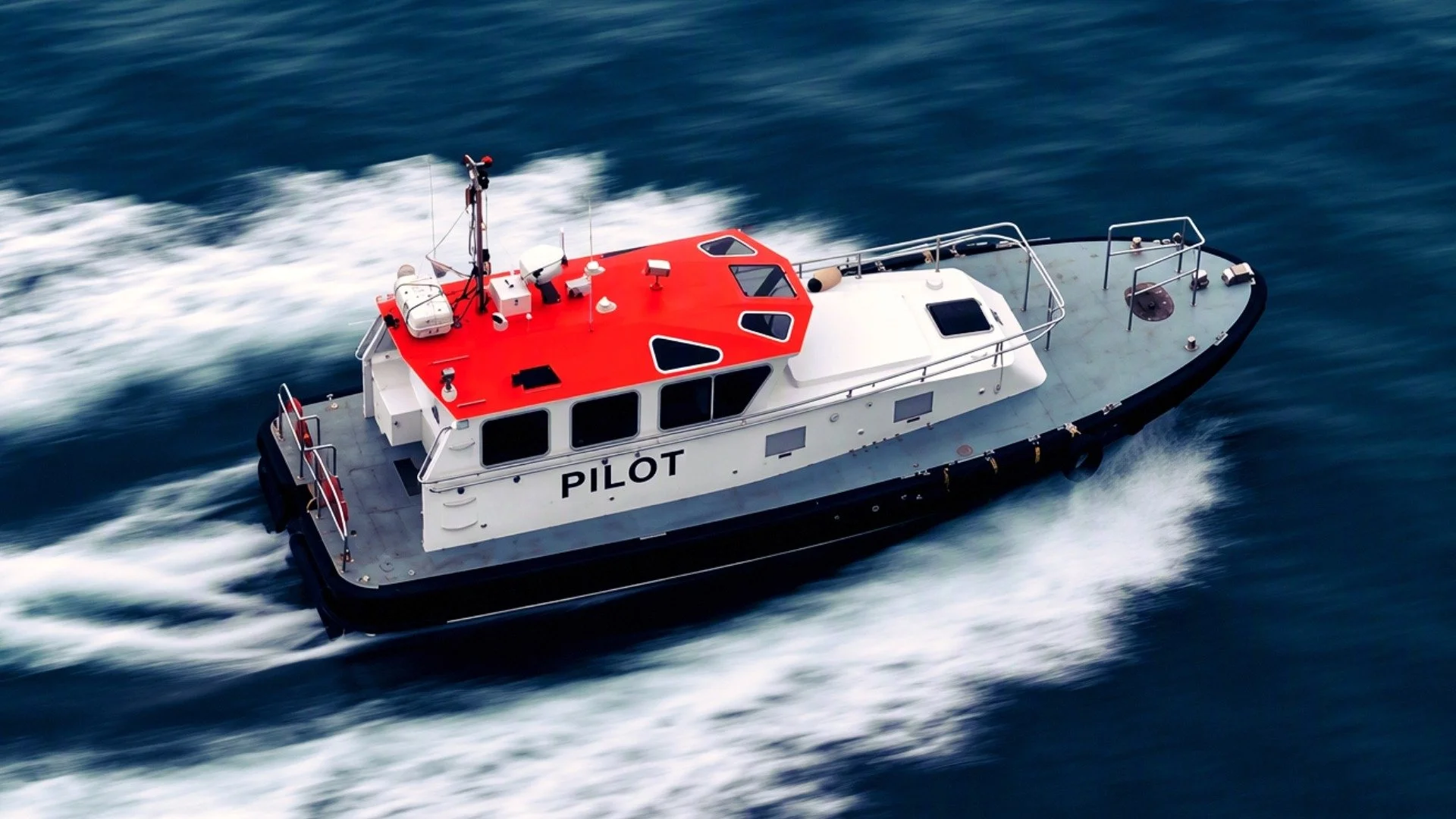
Pilot transfer remains one of the highest risk routine operations at sea. Pilots routinely embark and disembark vessels in challenging conditions, often relying on transfer arrangements that have historically been affected by inconsistent standards of maintenance, inspection and installation.
The revised Performance Standards, adopted under Resolution MSC.576(110), raise the bar considerably. One change stands out. The required breaking strength of securing arrangements (specifically the strong points and shackles the ladder and manropes are lashed to) is doubling, from 24kN to 48kN. These are not cosmetic updates. They represent a fundamental tightening of what a compliant arrangement looks like, covering:
Equipment design and construction
Rigging arrangements
Inspection and maintenance
Crew familiarisation and training
Safe access arrangements
Certification and compliance requirements
The objective is simple: pilots should be able to board and leave a vessel safely, every time, on every vessel.
The Deadline Superyachts cannot use dispensations to avoid.
Superyachts have historically benefited from a permissive approach to SOLAS exemptions and Flag State dispensations. This time is different. The International Maritime Pilots' Association has been explicit that dispensations will not be granted for these requirements.
The dates are worth having in front of you. From 1 January 2028, every pilot transfer arrangement, on a new vessel, must meet the baseline requirements of the new Performance Standards, and any new installation must be fully compliant from that date. Existing arrangements get more time: Yachts of 500GT and above have until the first survey on or after the 1st January 2029, and yachts under 500GT have until the 1st of January 2030. The voluntary early implementation window is already open.
IMPA's 2026 Safety Campaign recorded a significant non-compliance rate across both passenger ships and superyachts. The most common deficiency is the pilot ladder arrangement itself, but the underlying cause is frequently structural rather than a simple equipment failure. That is precisely why this is an engineering problem before it is a procurement one.
Compliance as a Catalyst, Not Just a Checkbox
Regulations are often a signal of where an industry is heading. They highlight emerging risks, raise the bar on existing standards, and create genuine opportunities to improve how vessels are designed, maintained and operated. The most successful operators do not wait for a regulation to force change. They treat it as a reason to get ahead. SOLAS V/23 is one of those moments.
How Houlder Can Help
We are not compliance consultants. We are naval architects and structural engineers, and pilot transfer compliance is, at its core, an arrangement and structural engineering problem.
Our approach begins with a hull form and access survey to establish what is geometrically achievable on a given vessel, followed by a structural assessment of the relevant attachment points. Where a permanent modification is the right answer, we design it, working through the structural design and analysis needed to meet the new Performance Standards, and carry that through to fabrication drawings, class interface and flag state submission. For yachts with significant flare, tumblehome or other complex hull geometry, this can be extended to a dedicated Pilot Launch Interface Assessment, and where appropriate, CFD or operational sea state modelling. That’s because meeting the performance standards on paper does not by itself guarantee a safe, practical transfer from a pilot launch.
Where structural modification is not the preferred route, we can develop a Pilot Transfer Arrangement Booklet that formally documents the yacht’s existing arrangement. That said, a Booklet should be viewed as a mitigation measure rather than a compliance solution. It does not bring the yacht into full compliance, and there remains a risk that pilots may refuse to board. For owners seeking the cleanest and most robust long-term outcome, a structural modification is the better option and the area in which our team specialises.
Sea. The Future.
At Houlder, Sea. The Future. is built on a simple belief: the future of maritime begins with the decisions we make today. Whether that future is shaped by decarbonisation, digital transformation, alternative fuels or evolving safety regulations, the goal is the same: a safer, smarter and more sustainable maritime industry.
The SOLAS V/23 amendments are a reminder that progress is not always about revolutionary technology. Sometimes it is about strengthening the fundamentals that keep people safe every day. Pilot transfer safety may not be the most visible topic at Monaco Yacht Show. It could be one of the most important.
If you manage vessels that could be affected, here is a useful exercise before the show: pull up your current pilot transfer arrangement and ask whether it would pass an access survey today, not whenever your compliance deadline in 2029 or 2030 happens to arrive.